THE NVIDIA
CONNECTION.
Four companies. Four materially different relationships. What does “NVIDIA-backed” actually mean when the evidence is separated from the headline?
One label.
Different evidence.
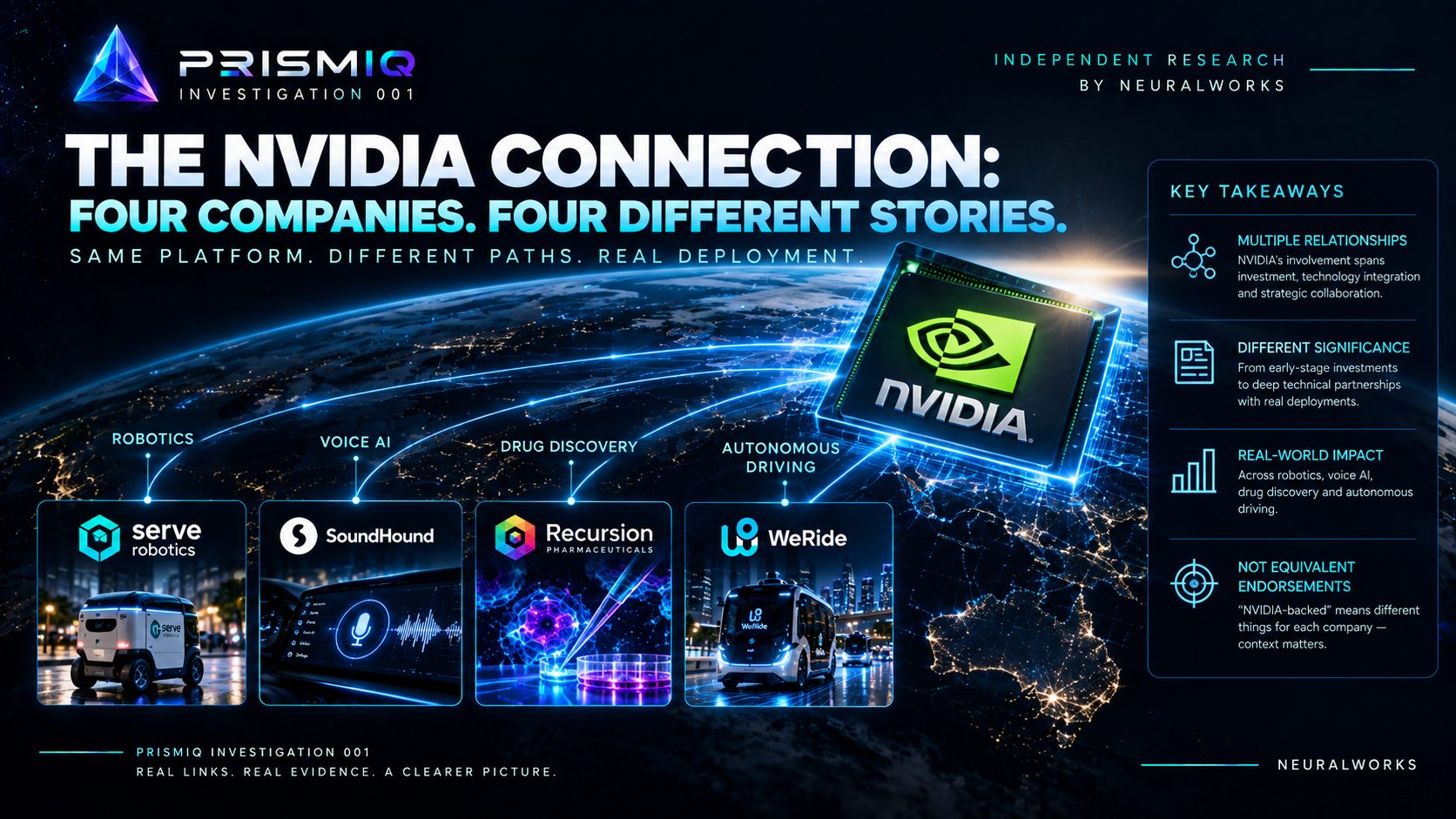
“NVIDIA-backed” is often used as if it describes one kind of relationship. It does not.
This investigation examined four publicly traded companies with documented NVIDIA connections and classified what the evidence actually establishes: equity investment, strategic collaboration, technology integration or platform adoption.
Four companies. Four connections.
NVIDIA has invested in Serve, while Jetson Orin, Isaac Sim, JetPack and TensorRT form part of Serve’s robotics stack. NVIDIA reports more than 1,000 robots and more than 100,000 deliveries.
The strongest current evidence is technical: SoundHound’s in-vehicle conversational AI integrates with NVIDIA DRIVE. NVIDIA also historically disclosed a SoundHound shareholding.
NVIDIA made an approximately $50 million PIPE investment alongside a multi-year AI drug-discovery collaboration spanning DGX Cloud, BioNeMo and deployed H100 infrastructure.
WeRide identifies NVIDIA as an early investor from 2017. NVIDIA independently confirms the long-running DRIVE technology relationship across autonomous-driving platforms.
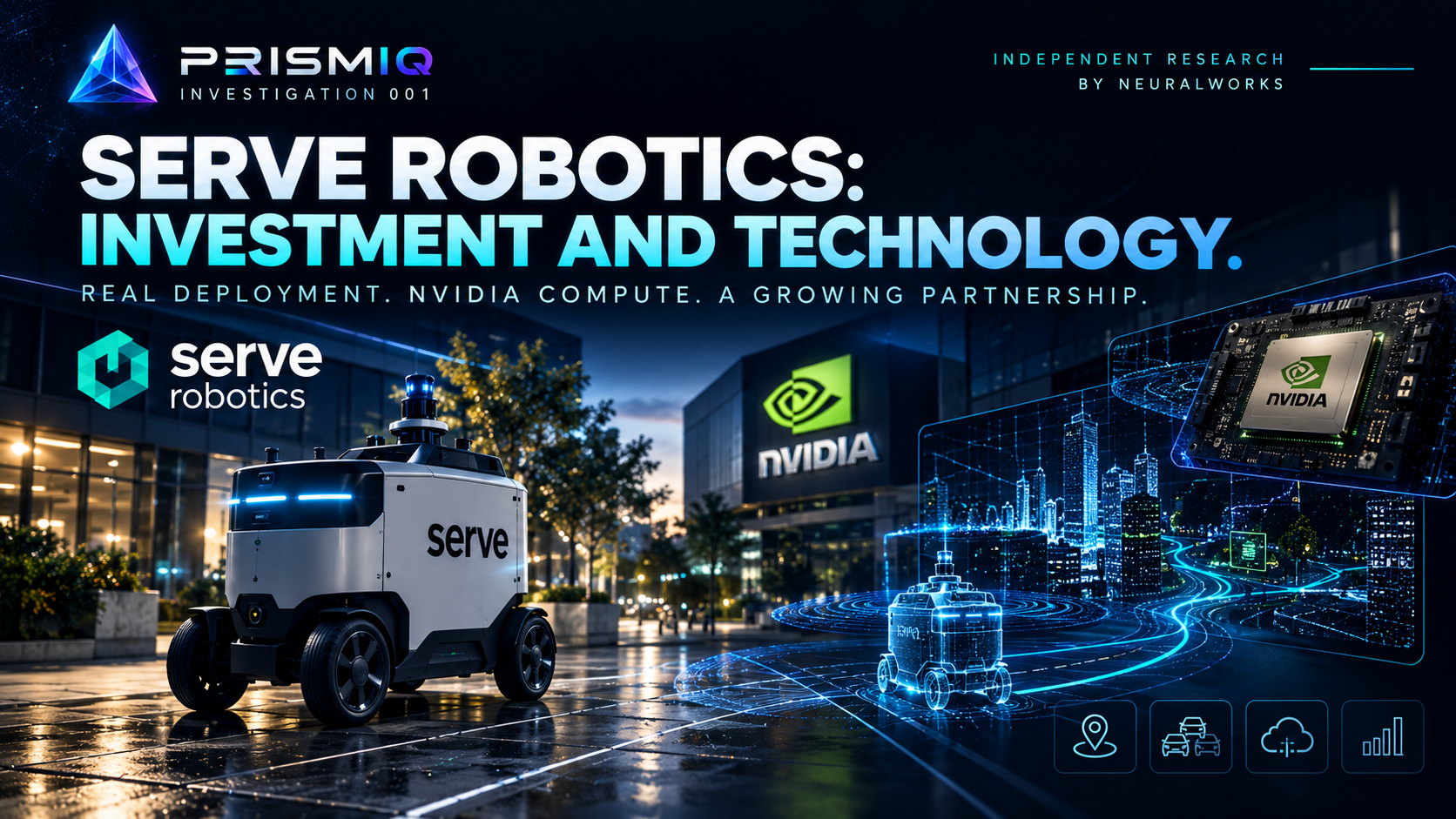
Physical AI in the real world.
For Serve, the NVIDIA relationship extends beyond a cap-table connection into the operating robotics stack.
NVIDIA’s own case study documents Jetson Orin AGX, Isaac Sim, JetPack and TensorRT in Serve’s development and deployment environment. The evidence supports describing the relationship as investment plus core technology usage — but not NVIDIA control, exclusivity or material financial dependence.
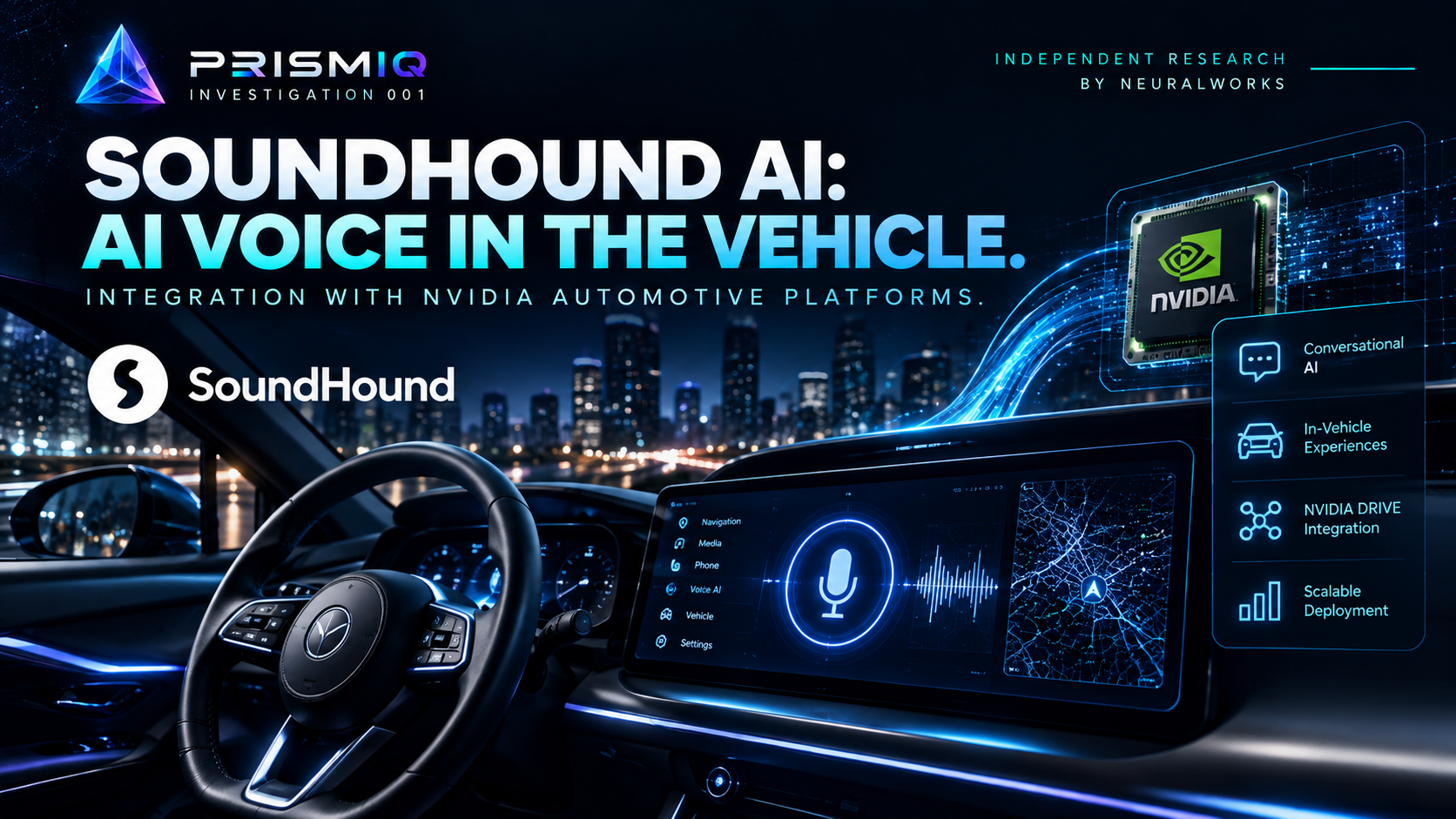
Current connection: integration.
SoundHound’s NVIDIA story contains two separate facts: historical equity ownership and an active automotive technology integration.
NVIDIA and SoundHound materials support in-vehicle conversational and generative AI running with NVIDIA DRIVE. What is not publicly established is NVIDIA-attributable revenue, production volume for the exact configuration, exclusivity or a large current NVIDIA commercial contract.
The clearest financial case.
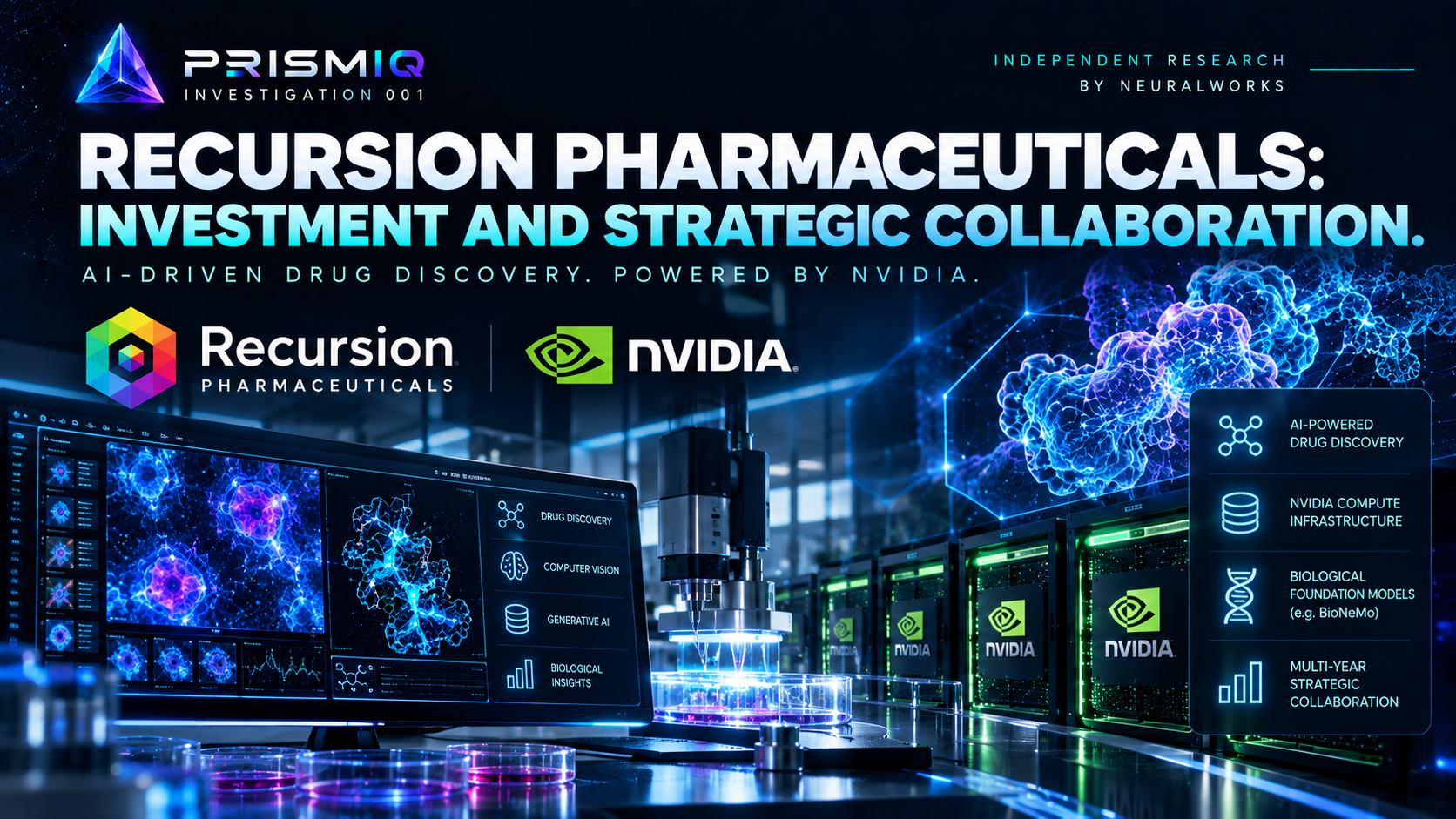
Recursion has the most explicitly quantified NVIDIA relationship in this group: approximately $50 million of equity investment tied to a defined technical collaboration.
The collaboration progressed into deployed infrastructure and models: DGX Cloud, BioHive-2 with 504 H100 GPUs, and the Phenom-Beta model made available through NVIDIA BioNeMo. That is meaningful technical delivery; it is not evidence that AI drug discovery has already produced validated clinical or commercial success.
Autonomous-driving platform depth.
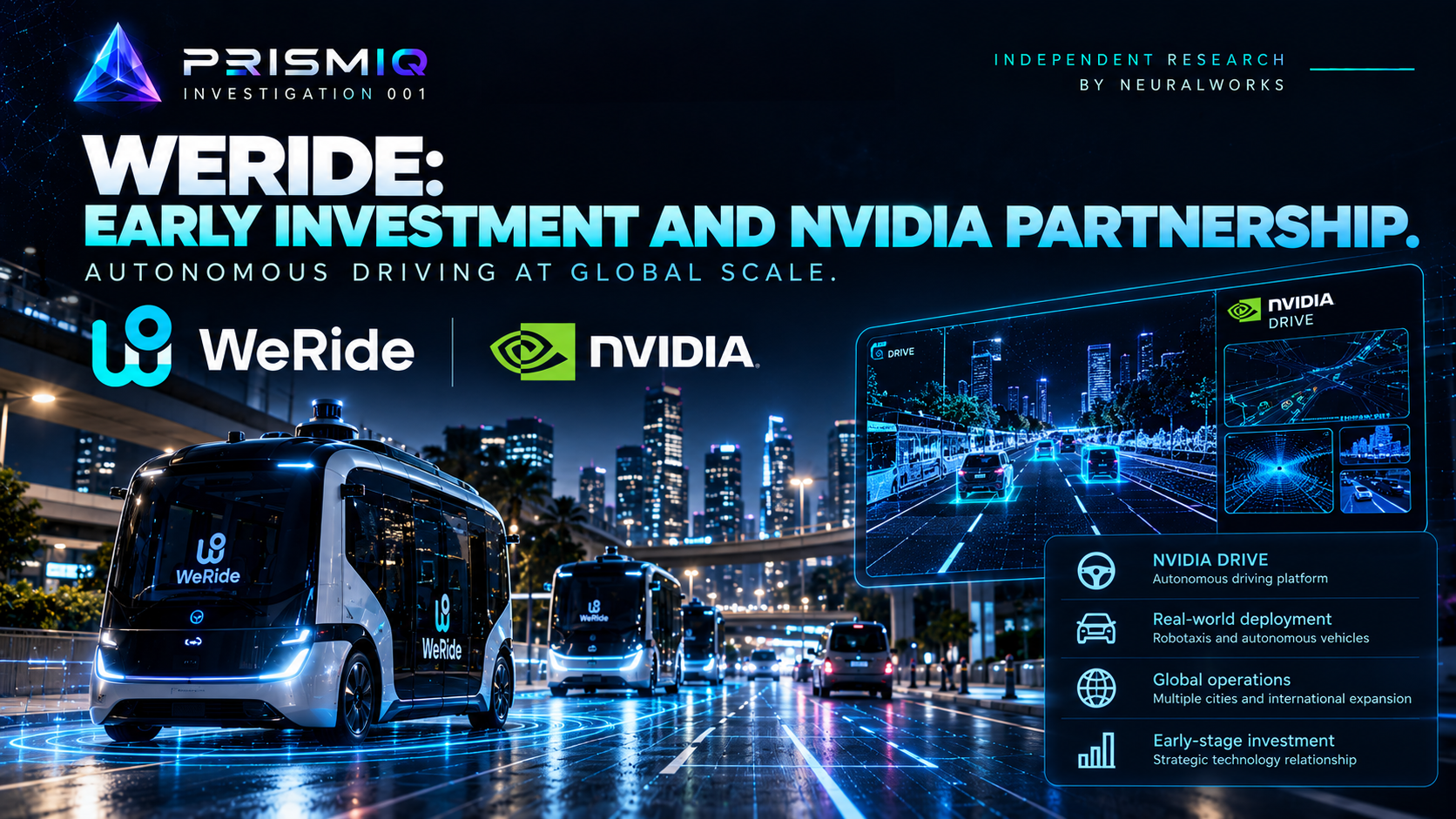
WeRide combines an early NVIDIA investment with years of adoption of NVIDIA automotive computing.
WeRide disclosures describe NVIDIA as an early-stage investor in 2017. NVIDIA separately confirms development on its automotive platform, including newer DRIVE Thor work. The evidence supports a durable technology relationship, but does not establish control, exclusivity, purchase commitments or guaranteed commercial scale.
“NVIDIA-backed” isn’t one thing.
The label hides the relationship.
Investment, collaboration, integration and platform adoption describe materially different connections.
Recursion is the clearest financial case.
The approximately $50 million PIPE and defined technical collaboration are directly documented.
Physical integration can matter more than investment.
For Serve and WeRide, NVIDIA computing sits close to the real operating product.
Connection is not endorsement.
None of these relationships by itself establishes NVIDIA control, exclusivity or guaranteed commercial success.
Primary-source led.
Investigate it yourself.
PrismIQ is the NeuralWorks research intelligence agent built to follow evidence, test narratives and connect signals across sources.
OPEN PRISMIQ