
DEFYING GRAVITY.
Tesla finally showed the Roadster airborne. That answers one question — and exposes a much harder set of questions about safety, production, reuse and legal customer flight.
It flew.
What changed?
The October 15 demonstration materially changes the evidence. The cold-gas architecture is no longer just a spectacular claim: a Tesla-controlled prototype performed controlled airborne manoeuvres. But a prototype crossing the physics threshold is not the same as a safe, manufacturable, refillable and legally usable customer vehicle.
Nine years changed the question.
The Roadster story begins as a performance promise. On 15 October 2026, it becomes an engineering evidence problem.
2026 — 15 October: the physics changes
A redesigned prototype performs controlled airborne manoeuvres at Tesla’s McGregor demonstration. The investigation moves from “can this work?” to “can this become a customer product?”
The Roadster is the interface.
Three views, three different questions. Exterior inspects the prototype. Systems maps the machine. Evidence grades what the imagery and demonstration actually establish.
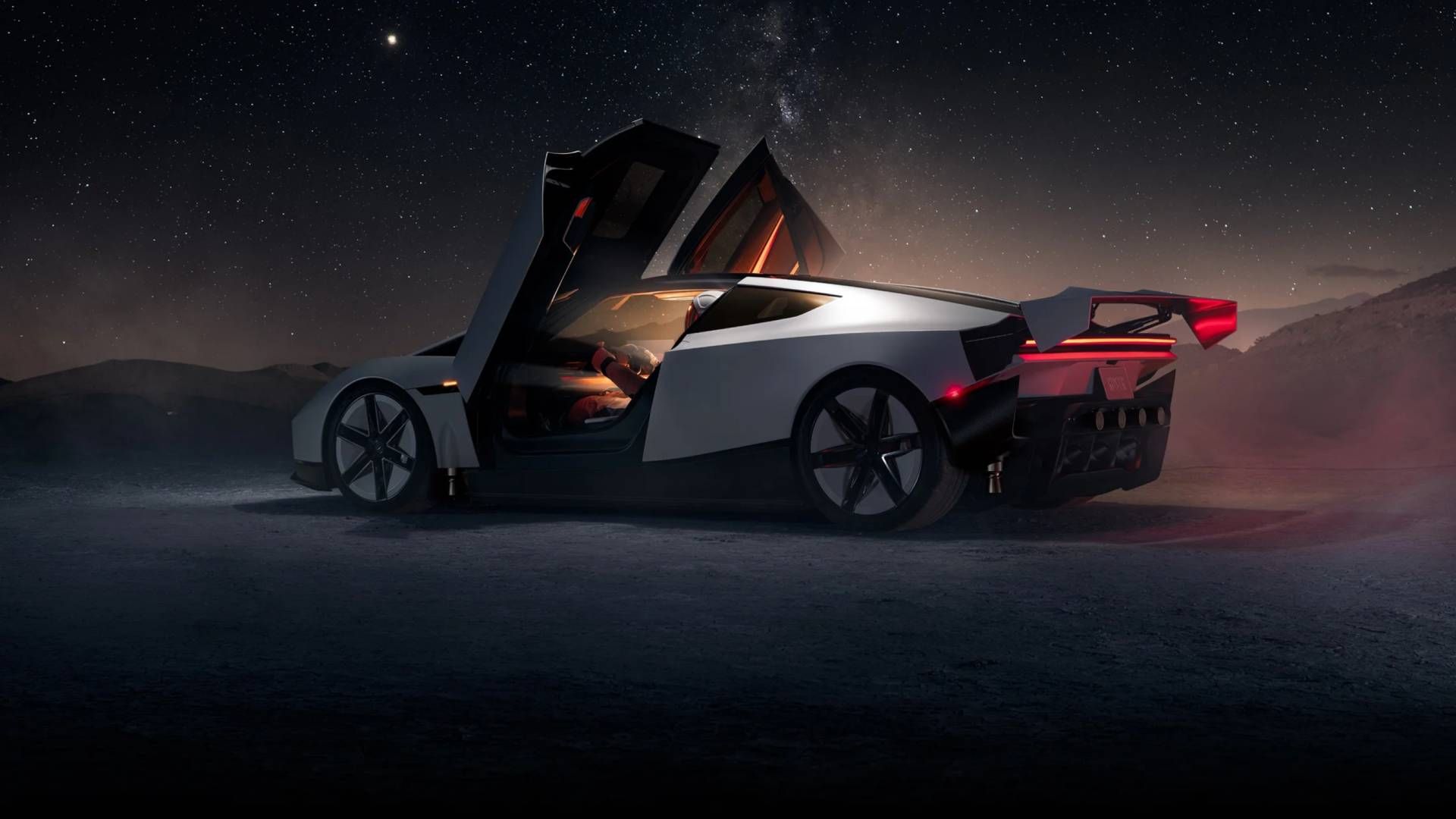
Lift isn't the hard part.
Using the reported figures as a first-order check, the thrust-to-weight relationship is strong enough to make short airborne manoeuvres credible. Duration and control consume the margin quickly.
First-order comparison using >80 kN reported rear thrust and ~1,700 kg working vehicle mass.
Analytical estimate, not a demonstrated flight-duration specification.
Favourable analytical envelope. It is not a claim that the Roadster can hover for 7–10 seconds.
Interrogate the image.
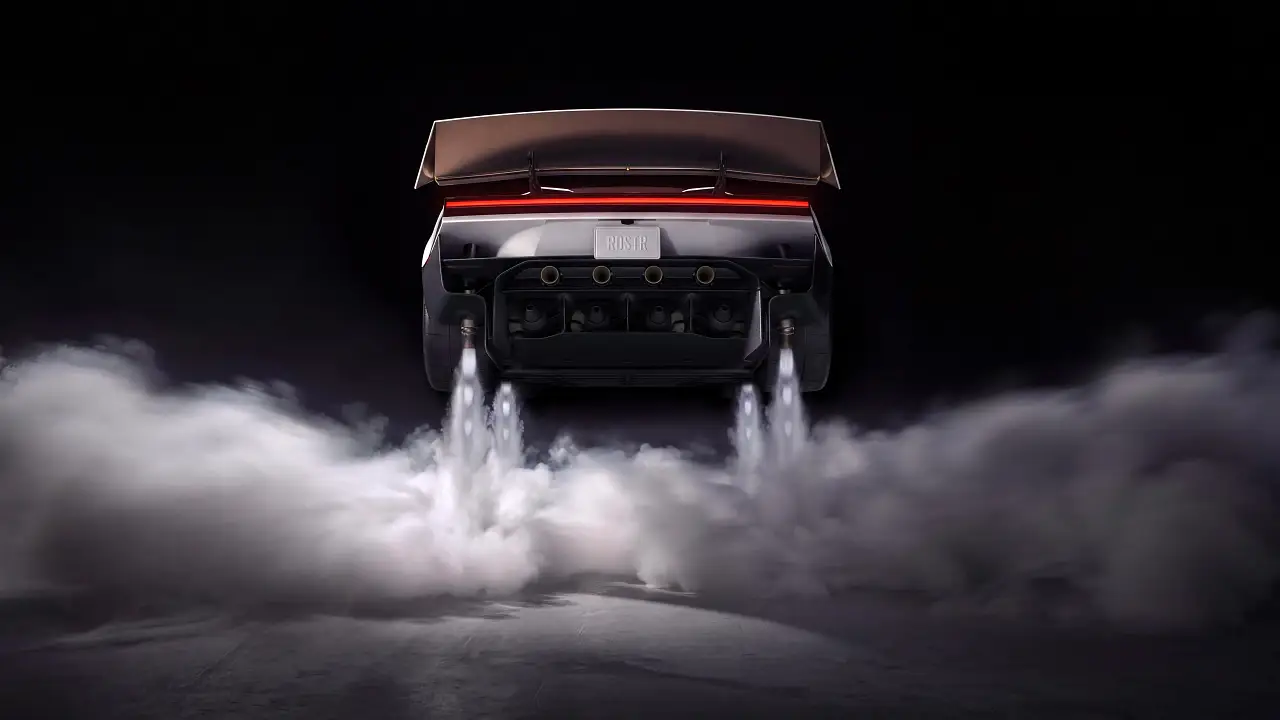
These are not decorative gallery shots. Select an evidence frame, then switch between the untouched source view and PrismIQ’s analytical overlay to see exactly what the image establishes — and what it does not.
A real Tesla-controlled prototype became airborne and performed controlled manoeuvres. This materially strengthens the physical-feasibility case.
DOES NOT ESTABLISH • occupied safety, production configuration, endurance or customer legality.Probability of reality.
A compact dependency cascade. Each stage narrows the set of futures that survive. Select a stage and its interpretation stays in view.
Forecasts, not measured probabilities.
These percentages express PrismIQ’s current degree of confidence given incomplete evidence. They are not Tesla statistics, experimentally measured probabilities or claims of ±1% precision.
chance genuine controlled airborne capability survives into the customer product
12% × 52% ≈ 6%PrismIQ’s evidence-weighted estimate for the Roadster reaching customers in any configuration.
Not an aircraft. Not permission.
The regulatory position is unusual precisely because the vehicle sits outside familiar categories. Current classification should not be confused with approval for routine airborne use.
FAA classification
The FAA has said the Tesla vehicle does not meet its current definition of an aircraft. That statement does not create a public-flight approval pathway.
Customer operation
Routine customer airborne use would still intersect with safety, road rules, insurance, local restrictions and potentially new regulatory treatment. No established pathway has been demonstrated.
Tesla has answered the physics question.
It hasn't answered the product question.
The engineering appears real. The path from experimental prototype to safe, producible and legally usable customer vehicle remains unresolved.
Investigate it yourself.
PrismIQ is the NeuralWorks research intelligence agent built to follow evidence, test narratives and connect signals across sources.
OPEN PRISMIQ